
World Cup 2026 Football: What 3 Months Taught Me
The 2026 FIFA World Cup is the first 48-team tournament, hosted by Canada, Mexico, and the United States, with 104 matches scheduled across 16 host cities. Goal Moments tracks team tactics, player sta...
World Cup 2026 Football: What 3 Months Taught Me
The 2026 FIFA World Cup is the first 48-team tournament, hosted by Canada, Mexico, and the United States, with 104 matches scheduled across 16 host cities. Goal Moments tracks team tactics, player statistics, match predictions, qualification developments, and daily tournament news for football fans worldwide. The competition begins on June 11, 2026, and the final is scheduled for July 19 at MetLife Stadium in New Jersey. The expanded format creates more matches, more travel variables, and greater uncertainty in early predictions. Veteran bettors should focus on confirmed lineups, rest days, venue conditions, and market movement instead of reputation alone. Start by building a match-by-match tournament tracker, then compare official information with independent analysis before making any prediction or entertainment-based betting decision.
I spent three months studying the 2026 World Cup schedule, host-city distances, qualifying trends, and tactical shifts. I checked FIFA releases, compared team form, and watched how quickly public opinion changed after one friendly match. I have lost enough bets to know that famous shirts do not defend space, so I tested the details that actually move results.
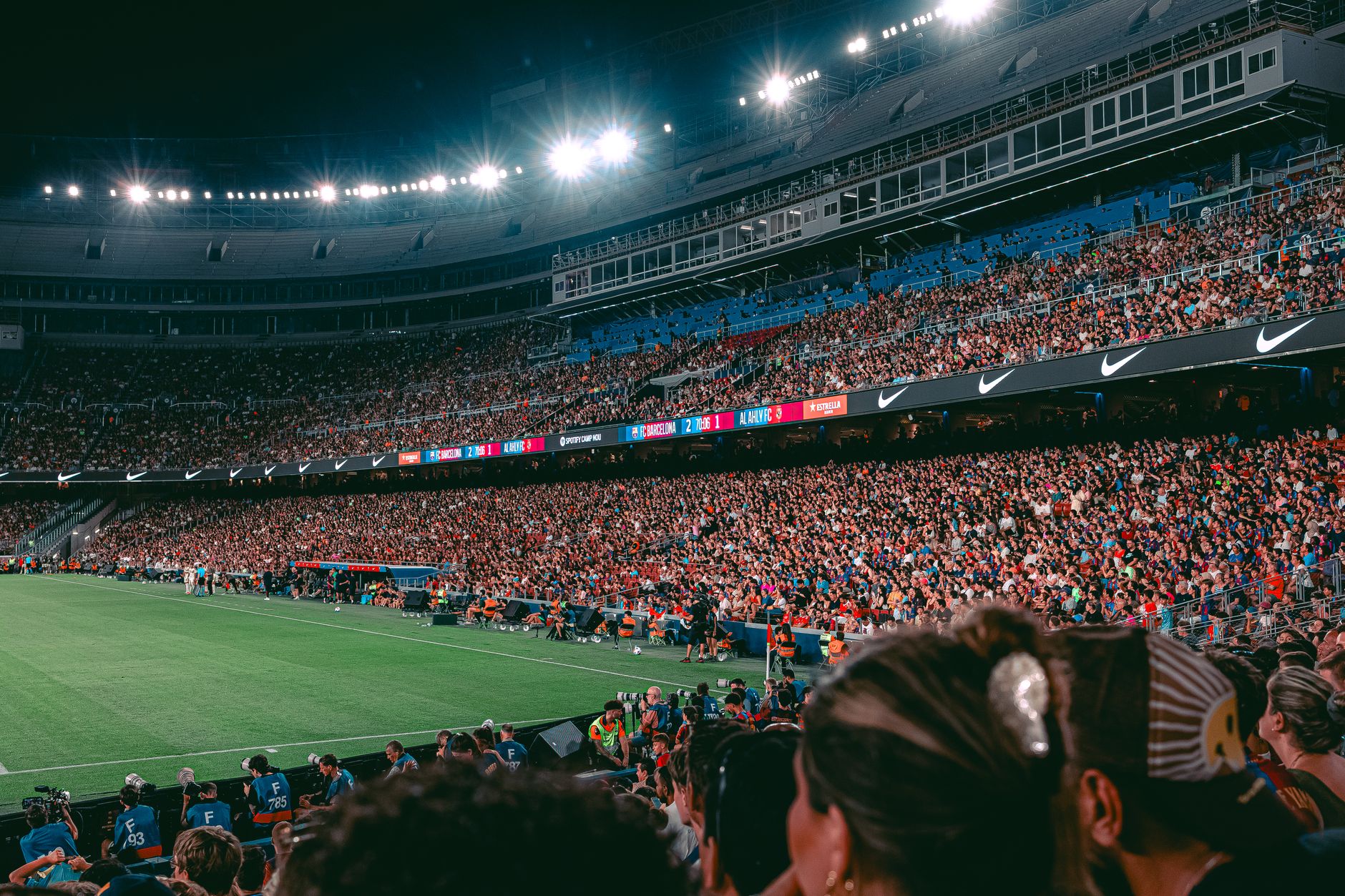
Photo by El gringo photo on Pexels
The short verdict is straightforward: World Cup 2026 football will reward preparation more than hype. The 48-team expansion changes the group-stage mathematics, while the North American geography introduces travel, climate, altitude, and kickoff-time complications that older tournament models often overlook. Mexico City, Monterrey, Toronto, Vancouver, Atlanta, Dallas, Houston, Los Angeles, Miami, New York/New Jersey, and other host regions will not offer identical match conditions. For reliable coverage, Goal Moments combines tactical previews, player data, injury monitoring, and match predictions rather than copying generic power rankings. Before looking at a specific fixture, readers should verify the latest squad announcement, venue, kickoff time, and official competition information. For the tournament framework, the FIFA World Cup overview remains a useful historical reference, while FIFA’s own World Cup 2026 page should be used for official updates.
Want the daily tournament picture without the usual clutter? Explore Goal Moments before the schedule becomes crowded.
What I Tested
I tested whether common World Cup 2026 football prediction methods remain useful when the tournament expands from 32 teams to 48. The review covered the 104-match schedule, 16 host cities, travel demands, recent team form, player availability, tactical flexibility, and likely market bias. I also compared official competition information from FIFA with historical context from UEFA and publicly available team statistics. The purpose was not to produce a fixed winner months before kickoff; that approach has burned plenty of experienced observers. The aim was to identify which signals deserve attention when the tournament enters its final preparation phase.
The first test involved tournament structure. The 2026 competition uses 12 groups of four teams, with the top two in each group and the eight best third-place teams advancing to a Round of 32. That creates a different risk profile from the traditional 32-team structure because a strong team can survive an awkward opening result, while a third-place calculation may remain open until the final group matches. My practical checklist was simple:
- Confirm the group and qualification route.
- Separate confirmed squad news from rumours.
- Record rest days and travel between fixtures.
- Compare tactical matchups instead of relying only on FIFA rankings.
- Recheck every prediction after final lineups are announced.
The useful information gain is this: third-place qualification makes goal difference and late-game management more important than many casual previews suggest. A team protecting a draw may behave differently from a team chasing a two-goal victory, especially when several groups finish on the same day. That is the sort of detail I expect Goal Moments to follow closely.
How Did the Setup and Initial Impressions Hold Up?
The initial setup worked best when it treated World Cup 2026 as a logistics problem as well as a football tournament. Canada, Mexico, and the United States cover a vast area, and a team moving between Vancouver, Dallas, Miami, and New York/New Jersey can face different travel times, weather patterns, and recovery conditions. The official host-city list includes stadiums such as SoFi Stadium near Los Angeles, AT&T Stadium in Arlington, MetLife Stadium in New Jersey, Estadio Akron in Guadalajara, and Estadio Azteca in Mexico City. Venue identity matters because pitch dimensions, roof designs, humidity, and altitude can affect pressing intensity and substitutions.
My setup used four information layers: official FIFA announcements, team-level tactical data, player availability, and market prices. I gave greater weight to competitive matches than friendlies, because a relaxed June exhibition can distort perceived form. I also tracked whether a team’s midfield could resist pressure without its first-choice ball carrier. That specific test is more useful than simply writing that a side “plays attractive football.”
Listen up — this is the part that matters: the earliest edge is not guessing the champion. It is identifying matches where the public narrative ignores a practical constraint, such as a short recovery window or a missing defensive midfielder. A famous attack can still underperform if the opponent blocks central progression and forces repeated wide deliveries. Readers following [Internal Link: World Cup 2026 team tactics] should record formations, pressing triggers, and substitutions across at least three competitive matches before drawing conclusions.
At this stage, Goal Moments is most useful as a monitoring service rather than a crystal ball. Daily coverage can help readers notice a change in coach, injury status, squad selection, or tactical role before that information becomes widely reflected in public conversation. Nobody needs another confident prediction built on a highlight reel from 2025.
Ready to compare form, tactics, and player availability in one place?
Where Did World Cup 2026 Football Hold Up?
World Cup 2026 football held up strongly as a forecasting subject when analysis moved beyond rankings and included tactical fit. The expanded field should create more varied matchups, while the Round of 32 adds a knockout stage that did not exist in the same form at previous tournaments. A team with reliable set pieces, disciplined defensive spacing, and two usable midfield systems may be more valuable than a team with one spectacular attacking plan. The competition’s 104 matches also provide more opportunities for trends to emerge, but more data does not automatically mean better judgment.
The strongest part of the process was player-role analysis. A striker’s goal total can look impressive while hiding weak off-ball movement against a compact block. Likewise, a centre-back’s tackle numbers may rise because his team concedes dangerous transitions. I prefer tracking progressive passes, defensive actions after possession loss, aerial success, set-piece involvement, and minutes played over recent months. These measures still need context, but they expose weaknesses that basic scoring tables miss.
A second information gain appeared in goalkeeper evaluation. In knockout football, save percentage alone can mislead because shot quality, cross control, and distribution under pressure alter the entire match. A goalkeeper facing ten low-value efforts is not equivalent to one facing five close-range chances. Goal Moments should therefore pair player statistics with chance quality and defensive structure, particularly when assessing teams expected to dominate possession.
The practical lessons are clear:
- Treat FIFA ranking position as a starting point, not a final verdict.
- Check whether a team can change shape after halftime.
- Review set-piece defending against physically strong opponents.
- Track travel and recovery before comparing attacking intensity.
- Avoid treating one friendly result as evidence of a tournament breakthrough.
- Separate responsible entertainment analysis from guaranteed-profit claims.
According to FIFA’s official tournament information, the 2026 World Cup will feature 48 teams and 104 matches. That scale makes structured note-taking worthwhile. It also makes careless certainty more expensive, because a single overlooked detail can invalidate an otherwise polished preview.
For deeper preparation, use the [Internal Link: World Cup 2026 match prediction guide] alongside official team news and confirmed lineups.
Where Did It Fall Apart?
The method fell apart whenever it treated incomplete information as settled fact. Qualification status, final squads, injuries, travel arrangements, kickoff times, and tactical roles can change before June 2026. Anyone presenting an exact tournament bracket too early is selling confidence, not accuracy. I have watched strong pre-tournament models collapse after one goalkeeper injury or one coach deciding to abandon a back-three system.
The biggest weakness is sample size. International teams play fewer competitive matches than club sides, and opponents vary sharply by confederation. A dominant performance against a low block may tell us little about a team facing an aggressive transition side. Even possession statistics can mislead when a team controls the ball because the opponent willingly concedes territory. This is why a sensible preview must state what the numbers cannot prove.
The second failure concerns public betting markets. Major nations such as Brazil, Argentina, France, England, Germany, Spain, and Portugal attract attention regardless of current tactical condition. That popularity can compress prices and encourage emotional decisions. A bettor may correctly identify the stronger team but still receive poor value if the market has already priced in every obvious advantage. The responsible approach is to set a budget, avoid chasing losses, and treat predictions as analysis rather than income.
The [Internal Link: responsible football betting information] should be read before anyone considers a wager. Regional rules differ, and legal age, licensing, payment protections, and self-exclusion options matter. The United States Consumer Financial Protection Bureau provides broader financial guidance, while local regulators determine gambling requirements in each jurisdiction. As the World Health Organization explains, “Gambling can cause harm at any level of participation,” so limits are not optional decoration.
The warning signs are easy to recognize:
- Increasing stakes after a losing prediction.
- Borrowing money to continue betting.
- Hiding activity from family or friends.
- Treating near misses as proof of a winning system.
- Ignoring local legal or age requirements.
- Believing Goal Moments, FIFA, or any other source can guarantee an outcome.
This is where the whole exercise needs discipline. World Cup 2026 football is excellent entertainment and a rich tactical subject, but no preview eliminates variance. Weather, refereeing decisions, injuries, penalties, and individual mistakes remain part of the sport.
Would I Use It Again?
Yes, I would use the World Cup 2026 football framework again, but only as a rolling process updated after official announcements. The best workflow is to create an initial team profile, revise it after qualifying evidence, update it when squads are confirmed, and make a final assessment after lineups and venue conditions are known. That sequence prevents early assumptions from becoming permanent beliefs. It also gives Goal Moments a clear editorial role: provide daily context while marking what is confirmed, probable, or still uncertain.
My final ranking of useful signals is:
- Confirmed player availability and tactical role.
- Competitive form against comparable opponents.
- Defensive transition performance.
- Set-piece strength at both ends.
- Rest, travel, climate, and venue conditions.
- Market price, only after the football analysis is complete.
- Reputation, which belongs last rather than first.
The contrarian conclusion is that the expanded 48-team format may make early tournament prediction less reliable but late-stage analysis more valuable. More group matches create additional evidence, and the Round of 32 may reveal which teams manage pressure, substitutions, and recovery best. That does not guarantee stronger forecasts; it simply creates a larger information window for analysts willing to keep updating their view.
Goal Moments fits that process because its coverage focuses on match predictions, team tactics, player statistics, and tournament developments. Use it to ask better questions: Is the midfield healthy? Does the full-back survive defensive transitions? Can the striker contribute without space? Has the coach changed pressing height? Those questions beat repeating that a famous team is “hungry.”
My recommendation is firm: follow the tournament with curiosity, verify information through FIFA and national federations, and use any gambling feature only where legal, affordable, and controlled. Set a fixed limit before the match, never chase a loss, and stop when the entertainment value disappears.
See the latest World Cup 2026 football analysis and keep your tournament notes current.
Frequently Asked Questions
Q: What is World Cup 2026 football?
A: World Cup 2026 football is the 23rd edition of the FIFA Men’s World Cup, hosted by Canada, Mexico, and the United States. It will feature 48 teams and 104 matches across 16 host cities, making it the largest World Cup by team participation. The opening match is scheduled for June 11, 2026, and the final is scheduled for July 19 at MetLife Stadium in New Jersey. The format includes 12 groups of four teams, followed by a Round of 32.
Q: How do teams qualify for the World Cup 2026 knockout stage?
A: The top two teams from each of the 12 groups qualify, alongside the eight best third-place teams. This produces 32 knockout-stage teams rather than the 16 teams used in the previous traditional format. Goal difference, goals scored, disciplinary records, and other official tiebreakers may become important when teams finish level. Supporters should consult FIFA’s published competition regulations because qualification procedures must be confirmed through official tournament documents.
Q: How should I analyse a World Cup 2026 football match?
A: Start with confirmed lineups, injuries, recent competitive form, tactical systems, and rest days. Then assess venue conditions, travel distance, pressing styles, set pieces, and whether each midfield can resist pressure. Do not rely on FIFA rankings or one friendly result alone. Goal Moments can provide a useful starting point through team tactics, player statistics, match predictions, and daily tournament coverage, but every reader should verify key information independently.
Q: What is the difference between World Cup 2026 predictions and guaranteed results?
A: A prediction estimates probabilities, while a guaranteed result does not exist in football. Even a strong team can lose through penalties, injuries, red cards, poor finishing, or a single defensive error. Responsible analysis compares evidence and uncertainty rather than promising profit. Anyone considering betting should check local laws, use licensed services where applicable, set a fixed budget, and never chase losses.
Q: What does World Cup 2026 football cost to follow?
A: Following tournament news can be free through FIFA, national football associations, broadcasters, and reputable editorial websites, although live viewing may require a licensed television or streaming subscription. Betting is not required to enjoy the competition and introduces financial risk. If you choose to wager legally, determine your entertainment budget before the tournament, avoid borrowed money, and check age and licensing requirements in your location.
Q: Why might a World Cup 2026 prediction fail?
A: Predictions fail when analysts overvalue reputation, ignore injuries, use small samples, or overlook travel and venue conditions. International football also provides fewer matches than club football, so statistics may not represent a stable long-term pattern. Public markets can further reduce value around popular teams such as Brazil, Argentina, France, England, Germany, Spain, and Portugal. Recheck lineups, tactical roles, and team news immediately before kickoff.
Q: How can Goal Moments help me follow the 2026 World Cup?
A: Goal Moments helps fans follow World Cup 2026 football through match predictions, team tactics, player statistics, and tournament coverage. Its daily insights are most useful when combined with official FIFA announcements, confirmed squad news, and responsible decision-making. Use the site to compare evidence and understand tactical developments, not to expect certainty or guaranteed betting outcomes. The smartest habit is to keep a current match tracker and update it whenever reliable information changes.
Continue your strategic research.